
Computer Vision in Retail: How Vision Intelligence Is Reshaping Enterprise Store Operations
siddharth
Key Takeaways
- Computer vision is transforming traditional CCTV systems into intelligent retail monitoring solutions.
- AI-powered shelf monitoring improves product availability by identifying stock gaps, misplaced products, and replenishment needs.
- Integrating computer vision with POS, ERP, and inventory systems turns visual data into actionable business insights.
- Successful retail implementation depends on clear business objectives, suitable infrastructure, model accuracy, data privacy, and scalable deployment.
- The global computer vision AI in retail market is projected to reach USD 12.6 billion by 2033, reflecting growing enterprise adoption of visual intelligence.
In a retail environment, there is large volumes of information captured by different events such as customer interactions, movement of stock, and point-of-sale activity. This data has potential to give insight into how well businesses are performing.
CCTV cameras are commonly installed in stores. However, conventional CCTV systems offer limited visibility into day-to-day store operations. Instead, store managers will visually inspect the store, receive feedback from staff, and perform regular inventory checks and other external systems in order to understand how their store is performing. As such, there is a discrepancy between the data available to management from reporting and what is actually happening in store.
Computer vision for retail fills this gap by analyzing visual information through converting it into structured data. This shift from traditional CCTV to AI-powered visual intelligence is gaining momentum in retail. According to Grandviewresearch report global computer vision AI in retail market is projected to grow from USD 2.5 billion in 2026 to USD 12.6 billion by 2033, at a CAGR of 25.4%.
This guide explains how computer vision works in retail, where enterprises can apply it, what business value it can deliver, and how retailers can approach implementation.
Why Computer Vision Is Becoming an Enterprise Priority in Retail
Processes within retail environments include movement of stock between shelves and stores, interaction between products and customers, restocking processes and varying levels of customer traffic through tills.
As a network of stores increases in size, it becomes more difficult to monitor what is happening. Even if CCTV cameras are installed, this only provides value in hindsight, whereas it would be more useful to know about issues as they occur.
Computer vision can be used to help with this issue. It allows for visual data to be processed to detect events which need addressing.
From Traditional Surveillance to Intelligent Store Monitoring
Traditional CCTV will simply record video. In the event of some happenings, or in order to investigate, security personnel or staff can view the recorded video.
By using AI within video analytics, computer vision algorithms are applied to the video stream. Objects within the scene, activities and specific situations can be identified. Depending on the use case, alerts can be sent directly to staff, or data can be sent to a central monitoring system.
Where traditional video surveillance can help a retailer understand what has happened, intelligent video surveillance can help a retailer understand what is currently happening and make decisions on what action to take.
The Growing Need for Real-Time Retail Intelligence
For retailers operating across multiple locations, consistent store visibility across outlets can be difficult to maintain. A manager may be able to see how much sales, stock and staff performance have been in each store for each day, but may be unable to understand why products are out of stock at stores, why queues at points have increased and whether promotions have been set up correctly.
The insights generated visually offer good context. When combining computer vision with inventory management, point of sale (POS) and enterprise resource planning (ERP), the visual data can be compared to the data collected using the business applications. This allows for easy identification of anomalies and prioritisation of actions for the stores and standardisation of processes at different locations.
Key Applications of Computer Vision Across Retail Operations
Computer Vision should be implemented in processes where it is going to make an improvement. Like any other artificial intelligence, one needs to think about particular processes and see whether the insights generated from computer vision will help to improve them. The following applications demonstrate how the technology can help in various processes of retail operations.
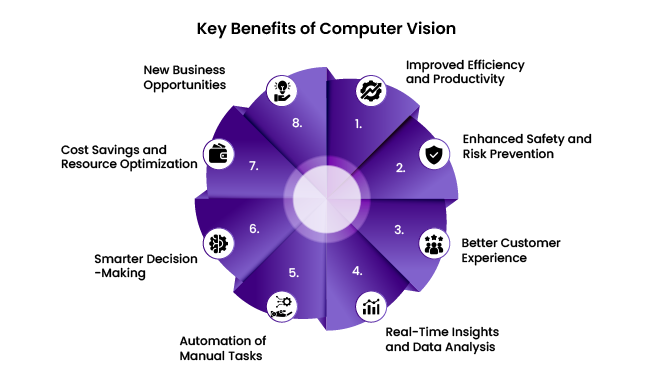
1. Inventory Intelligence and Automated Shelf Monitoring
The inventory on-shelf may differ from inventory in stock. Product may be out-of stock on-shelf even though it is in stock according to stock records.
Shelves can be monitored using computer vision for gaps in product, product on shelves, misplacement of product, and changes in quantity of products. This is accurate where appropriate cameras are in position and the images are clear enough. When connected with inventory management systems, these observations can help retailers:
- Identify shelf gaps and potential stock availability issues.
- Monitor product placement and replenishment activity.
- Compare shelf conditions with inventory records.
- Prioritize replenishment based on product demand and availability.
- Reduce dependence on repeated manual shelf inspections.
You need to know the difference between a ‘visual out of stock’ and an out of stock. Using computer vision, you can determine whether it is visually empty. You then evaluate the information needed and take the next action.
2. Customer Behavior Analytics and Shopper Intelligence
Understanding customer flows allows retailers to optimize store layout, item positioning, and merchandising. Using computer vision business can understand customer flow, and thus determine which areas of the store are most popular, and how long people spend in particular areas. This does not require knowing specific customers. These insights can help retailers understand:
- Which store sections attract the most attention.
- Where customers spend more time browsing.
- How shoppers move between product categories.
- Whether store layouts encourage product discovery.
- Which areas may require changes in merchandising.
Insights from this data should be used inline with sales and transactional data. Movement alone cannot indicate purchasing intent or lack of purchasing intent.
3. AI-Powered Loss Prevention and Theft Detection
Losses could be due to multiple causes such as theft, error, damage and inconsistency. Computer vision can be used for preventing loss by detecting specific activity within the environment.
It can help business to detect unusual interaction with stock, monitor restricted areas, unusual movement around high value items and anomalies between customer checkout behaviour and point-of-sale data.
It is important to consider that alerts do not necessarily equate to theft. Systems should be put in place to allow human review of alerts, clear processes for escalating issues, and regular assessment to limit false positives and reduce unfair targeting of customers.
4. Planogram Compliance and Merchandising Intelligence
Planograms are common tools to ensure correct product placement in retail. However, ensuring consistent application of planograms across multiple stores with varying store layouts and regular stock topping operations can be challenging.
Computer vision can be used to detect out-of-position items, missing items and incorrect product placements. Promotional displays and brand placements can be monitored using computer vision.
A real time system was implemented in over 7000 7-eleven stores across Taiwan to monitor compliance with planograms (published in Scientific Reports, 2025). This shows that large-scale automated shelf monitoring is possible in retail.
This gives enterprise scale retailers increased consistency in product placement, enables detection of discrepancies in implementation, and allows category managers greater insight into product compliance within individual stores.
5. Footfall Analysis and Store Traffic Optimization
The number of people entering and moving in your store can be understood using people counters based on computer vision. With cameras placed in different positions within the store, depending on the configuration, it is possible to understand footfall in different parts of the store. This may allow you to:
- Peak-hour identification and workforce planning.
- Store traffic comparisons across locations.
- Better placement of promotional displays.
- Assessment of store layout changes.
- Understanding the relationship between visitor traffic and sales.
Retailers should distinguish visitor counts from unique customer counts. Counting entries does not necessarily reveal how many individual shoppers visited, particularly when repeat entries occur.
6. Queue Management and Checkout Optimization
Long queues will negatively impact customer satisfaction and potentially cause abandoned sales. Using computer vision at checkouts, the length of queues can be estimated. If queues become longer than a pre-defined threshold, then staff can be alerted.
This means that queues can be managed more efficiently than by only relying on staff observation at intervals. By analysing queue data in relation to transaction data and checkout efficiency, retailers can identify regular bottlenecks in different stores at different times.
7. Smart Checkout and Frictionless Shopping
Computer vision also supports more automated checkout experiences. Camera-based product recognition can identify items as customers select or place them in a designated checkout area. When combined with product databases, POS applications, payment systems, and other sensors, it can support automated product identification and transaction processing with other processes.
These applications can reduce manual scanning in suitable retail environments. However, product similarity, packaging variations, occlusion, and items placed together can affect recognition accuracy. A reliable implementation therefore requires appropriate validation, exception handling, and human assistance for transactions that the system cannot confidently process.
8. Store Safety and Intelligent Video Surveillance
Systems can be configured to detect specific safety critical situations such as entering forbidden areas, unattended items, over crowding and entering complex operational areas.
Within a warehouse or stockroom visual systems can be used to detect breaches of safety protocols and unauthorised access to areas. To be most effective at improving safety, alerts should have clear procedures to follow. If alerts do not have clear owners or escalation procedures, they will have very little effect on improving safety.
Want to Explore AI-Powered Video Surveillance for Better Store Safety? Discover Xcelight.
Measuring the Business Impact of Computer Vision in Retail
A value proposition in business is created where computer vision genuinely helps to improve processes. In retail businesses this can go further than just automating monitoring.
Revenue Protection Through Better Inventory Visibility
Out of stock issues, errors in inventory and slow re-stocking can lead to a loss in sales. Through increased awareness of out of stock items, businesses are able to make better decisions in re-stocking in order to reduce time/effort investment in out of stock items. Furthermore, visual data allows prioritisation in inventory checks meaning that an even distribution of checking across SKUs and locations is no longer necessary.
Operational Efficiency and Reduced Manual Intervention
Workers will no longer be performing repetitive tasks. They can be used to re-stock items, serve customers and make decisions. In a retail environment, automation of stock management does not mean people aren’t needed, but reduces the amount of repetitive checks. Workers can be given detailed information so that they can focus on particular aspects of the business.
Improved Customer Experience and Store Performance
The design of a store and the amount of waiting time customers face, as well as stock availability all can influence customer experience. By identifying issues in stores quickly, solutions can be put in place for issues which may have gone unnoticed before. Therefore improvements to store performance can be made by organisations.
Greater Control Across Multi-Location Retail Operations
A visual intelligence system is also very beneficial in large networks of stores. It enables management teams to get similar information from each store. Regional managers can easily identify common issues across multiple stores, compare how well different stores are performing and understand which stores may need additional support.
Faster, Data-Driven Business Decisions
Retail information may also be analysed using computer vision. This means that by combining sales and inventory data with visual information, retailers can understand why performance differs. Therefore, this information can be used to make decisions in stores, and determine if these decisions lead to improved performance.
Computer Vision Use Cases Across Retail Business Models
The implementation of computer vision will vary between different retail environments. Depending on product range, store size, and customer footfall, as well as business priorities, computer vision will be implemented differently.
Grocery and Supermarket Chains
Shelves have a wide variety of products, so computer vision can be used to identify stock levels, misplacements, promotion effectiveness and customer queue levels. In addition, computer vision can contribute to food safety. However, correct sensors and stock managing systems are needed to ensure correct temperatures and freshness.
Fashion and Lifestyle Retail
Understanding consumer engagement and effective product presentation is key for fashion stores. Using computer vision, information can be gathered on consumer activity, fitting room area activity (where appropriate), product presentation anomalies and how well product displays are performing. This allows store staff to optimise product positioning and understand where in the store consumers have taken interest in.
Electronics and Consumer Goods Retail
In Electronic retail environments, advanced security measures may be required for high value goods. By using visual analytics, anomalies in behaviour within high-security zones can be identified. This can assist staff in identifying and responding to possible security threats. Insights into customer navigation can allow improvements to be made to the layout of product demonstration areas.
Omnichannel Retail
Inventory visibility is important in omnichannel retail. Additional data can be gained from computer vision to give a better understanding of inventory on shelves. Integrating with inventory and order management systems can also help identify these mismatches.
This improved visibility of inventory in physical stores can lead to improved reliability in click and collect, in-store fulfillment and product availability. However, the image data should not be used instead of inventory data and in warehouse systems.
Building and Scaling Computer Vision Systems Across Retail Stores
Use cases should be considered in the broader context of your business. Consider current infrastructure, process, technical requirements and ongoing costs as part of this decision.
1. Identify Business Priorities and High-Value Use Cases
Define what you’re trying to achieve and who will be taking actions based on the insight. Identify how success will be measured. Starting with a specific use case means validating the use of the technology within a smaller group of people, making it easier to scale within the business.
2. Assess Existing Camera and Technology Infrastructure
Existing CCTV systems in stores may not be ideal for computer vision applications. Depending on the resolution of the cameras, field of view, lighting, frame rate, network connection speed, and location, detection accuracy may vary.
Cameras placed to observe people entering a store may not be ideal for detecting labels on products or individual items on shelves. An assessment of the infrastructure ensures that existing cameras can be re-used, moved or new equipment can be added.
3. Select the Right Computer Vision Models and Architecture
Depending on the application, different AI functionality is required. For example, object detection can detect objects in images, object classification can classify what has been detected, object tracking detects movement between frames in a video, and image segmentation detects specific areas/edges in an image.
Other AI models may be required to detect activity, count people, identify anomalies, or specific models for shelf analysis. The system must also consider the amount of video data being processed, the processing requirements, expected latency, and the deployment environment.
4. Integrate Visual Intelligence with POS, ERP, and Inventory Systems
Applications and insights can be brought together. If there is missing stock identified at the shelf, then integration with inventory systems means you can look at what stock is in the back room. Integration with POS gives contextual information about transactions. Replenishment processes could be supported by ERP systems.
Depending on the application, integrations can be made via API, event channels, database or existing retail middleware. Computer vision can therefore be applied to real world retail problems.
5. Validate Performance and Scale Across Store Locations
Performance in one location cannot be assumed to be the same in all locations within your network. Variations in lighting, shelving, sensor quality, product packaging, footfall and layout will affect performance.
Once you have confirmed that you are getting good performance metrics (such as precision, recall, false positive rate, speed, availability, and proportion of alerts leading to useful outcomes) then scalable deployment can be performed. This should be done in stages, and ongoing monitoring and improvements to models made.
Key Technical and Operational Challenges in Enterprise Computer Vision
Challenges in retail environments make effective computer vision difficult. To avoid costly implementations, it is important to understand these challenges early.
Model Accuracy in Dynamic Retail Environments
In real-world retail scenarios, detection models can be affected by occlusions from customers, visually similar items and varying illumination. In order to provide effective detection within these environments, training and test data should be representative of real retail settings. In addition, continual performance assessment and manual verification of uncertain detections is required.
Data Privacy, Security, and Regulatory Compliance
Consider data privacy. If collecting data from staff and/or customers, key principles to consider include transparency, appropriate processing, access, minimisation, retention periods and security.
Where possible, try to avoid identifying individuals from analytics in retail stores, for example by using anonymised foot traffic analytics. If you do intend on using technologies such as facial recognition, biometric recognition, this should be carefully considered. Due to varying data privacy laws around the world, legal and data protection teams should be involved in implementing these processes.
Legacy Infrastructure and System Integration
Integrating legacy CCTV systems, mixed Point of Sale solutions, inventory systems, and store management systems may require further middleware, API development, network infrastructure improvements or hardware changes. It is vital to have an integration framework to avoid data silos and ensure that alerts are sent to the correct people or systems within your business to take action.
Deployment Costs and Total Cost of Ownership
Overall cost includes AI development, hardware, cameras, edge devices, cloud processes, storage, networking, integration, maintenance, and model improvement. Retailers should consider how much they are saving by implementing computer vision. This can be seen in terms of saving staff time inspecting shelves, increased availability of products on shelves, fewer false alerts, and better allocation of resources.
Scalability and Consistent Performance Across Stores
While a solution may perform well in one location, some adaptation may be required in other locations. The positioning of cameras, store layout, types of products sold and environmental differences can impact model performance. With scaling, consideration should be given to centrally monitoring, configuration per locations, version controlling and ongoing testing.
The Future of Computer Vision in Retail: Emerging Capabilities and Enterprise Trends
AI vision is progressing from standalone detection, to integration with other AI capabilities and business processes.
Edge AI and Real-Time Store Intelligence
Edge processing of AI vision data means that data can be processed at the source, for example at Edge devices or local servers. This reduces data being sent to the cloud, therefore reducing latency and reducing network bandwidth requirements. In a hybrid solution, real-time processing occurs at Edge devices and only relevant alerts and summary data may be sent to central systems to allow for reporting and analysis.
Predictive Analytics for Proactive Retail Operations
By combining visual information with past sales, stock levels and store data, new insights can be gained. For accurate predictions, the historic data must be accurate and suitable models must be used. Computer vision will provide further operational data, but will not replace traditional forecasting.
Autonomous Retail and Intelligent Checkout
Solutions integrating cameras, sensing, object recognition and payment can be used to automate retail checkout processes which reduce manual effort. Object recognition, accurate payments, exception handling and customer confidence are required. The best solutions to implement will depend on commercial viability and practicality within each type of retail environment.
Convergence of Computer Vision, Generative AI, and AI Agents
Visual recognition can be used to understand what is happening in stores and AI can be used to provide analysis and enable actions. A visual analytics solution could detect recurring out-of-stock problems on shelves. An intelligent analytical layer could summarise this issue, cross-reference with stock data, and recommend appropriate action.
While AI agents may perform some actions, for example informing staff within stores, or triggering approved restocking actions via integrated enterprise systems, in certain processes, automated actions must be performed within pre-defined parameters, rules and under human supervision. The aim is to increase the quality and speed of decision making; however, not all processes within stores will be automated.
Building Custom Computer Vision Solutions for Enterprise Retail
Depending on the retail operations, custom computer vision solutions may be required beyond standard video analytics solutions. Consider custom computer vision solution for your retail business if:
When Do Retail Enterprises Need Custom Computer Vision Solutions?
Consider building a custom solution if you have specific requirements that can not be met with existing solutions. For example:
- Customized workflows for business operations: The models should be customized according to their offerings, store design, policies, and detection purposes.
- Integration with enterprise systems: Visuals should integrate with the POS, ERP, inventory management, or work-force management systems.
- Scalability across store types: Various stores with varied designs will demand models that have scalability and centralized management.
- Customized Analytics: Businesses will require specific functionality, such as product identification, object detection, activity monitoring, or video intelligence.
If the increased flexibility and integration potential of a custom solution provides enough added value to justify development and ongoing maintenance costs, then consider building a custom solution.
What to Evaluate in a Computer Vision Development Company
Choosing a development partner requires evaluating more than its ability to train an AI model. Retail enterprises should consider:
- Engineering expertise in AI and computer vision: Object detection, recognition, tracking, video analytics, and model optimization experience.
- Integration into the enterprise environment: The ability to integrate AI solutions with the existing retail infrastructure.
- Deployment knowledge: Edge, cloud, and hybrid deployment options knowledge and infrastructure requirements.
- Security and governance: Data protection, access control, model monitoring, and responsible AI deployment methodologies.
- Supporting AI: Performance monitoring, model updating, troubleshooting, and scaling capabilities.
The right partner should understand both the technical requirements and the operational environment in which the solution will be used.
How Xcelore Supports Enterprise Computer Vision Initiatives
We can develop computer vision solutions in retail using AI development engineers, software architectures, data integration and deployment. Xcelore offers the best custom AI product engineering capabilities. From an operational need we can provide working visual intelligence solutions. The services that can be delivered include:
- Custom Computer Vision Development: AI models designed for specific object detection, recognition, tracking, and image analysis requirements.
- AI-Powered CCTV and Video Analytics: Intelligent video monitoring to identify predefined activities, events, and operational exceptions.
- Retail Intelligence Applications: Visual analytics for store safety, customer behavior, product monitoring, and operational visibility.
- Enterprise Integration: Connecting computer vision applications with existing business systems and data workflows.
- Scalable AI Product Engineering: Developing solutions designed for deployment, monitoring, and continuous improvement across enterprise environments.
Consider what business challenge you are trying to solve, and how Visual Intelligence can help improve your operations. Speak to us about our Custom Computer Vision Development Services to understand how we can deliver a solution for your Retail Business.
FAQs
Q. How is computer vision used in the retail industry?
A. Computer vision analyzes images and video to identify objects, recognize activities, and monitor store conditions. Retailers use it for shelf monitoring, inventory visibility, customer movement analysis, loss prevention, queue management, planogram compliance, and intelligent video surveillance.
Q. How does computer vision improve retail inventory management?
A. Computer vision can identify empty shelf spaces, misplaced products, and visible stock discrepancies. When integrated with inventory systems, it helps retailers compare physical shelf conditions with recorded stock information and prioritize replenishment activities.
Q. Can computer vision help reduce retail theft and inventory shrinkage?
A. Yes. Computer vision can flag predefined suspicious activities, monitor restricted areas, and identify potential inconsistencies between product handling and checkout transactions. These alerts help employees investigate possible incidents. Detection systems should not automatically classify an activity as theft.
Q. How can retailers measure the ROI of computer vision?
A. Retailers can measure ROI using operational and financial indicators, including:
- Reduction in manual inspection hours.
- Improvement in shelf availability.
- Reduction in false alerts and response time.
- Changes in checkout waiting time.
- Improvement in planogram compliance.
- Reduction in verified inventory losses.
The baseline should be established before deployment so that improvements can be measured against existing performance.
Q. How much does a retail computer vision solution cost?
A. The cost depends on the number of cameras, AI model requirements, infrastructure, processing architecture, integrations, and deployment scale. A focused pilot will generally have different cost requirements from a multi-location enterprise implementation. Retailers should evaluate development costs alongside infrastructure, maintenance, and ongoing model optimization.
Q. Can computer vision integrate with existing retail systems?
A. Yes. Computer vision applications can integrate with POS, ERP, inventory management, warehouse management, and store operations systems through APIs, event-driven architectures, or middleware. The integration approach depends on the existing technology environment and the intended business workflow.
Q. How long does computer vision implementation take?
A. Implementation timelines depend on use-case complexity, data availability, camera infrastructure, model requirements, and integration needs. A focused proof of concept may take several weeks, while a production-ready enterprise deployment across multiple stores can require several months or longer. Infrastructure readiness and validation requirements significantly influence the timeline.
Q. Is computer vision in retail secure and privacy-compliant?
A. It can be implemented with appropriate privacy and security controls. Retailers should define the purpose of video processing, limit data collection, establish retention policies, secure footage and analytics, and provide appropriate transparency. Requirements vary by location and application. Biometric identification and facial recognition require additional legal and privacy assessment.
Related Blogs
Computer Vision in Logistics and Supply Chain: Turning Operational Visibility Into Measurable Business Value
17 min read
Role of Computer Vision in Enhancing Manufacturing Industry With Automation
12 min read
Enterprise Architecture Modernization: The Roadmap from Monolith to AI-Native Systems
16 min read

More Than a Development Partner. A Partner in Progress.
We stay with your product beyond launch. From modernization and optimization to platform upgrades, security improvements, and continuous evolution, we help your solution keep moving forward.